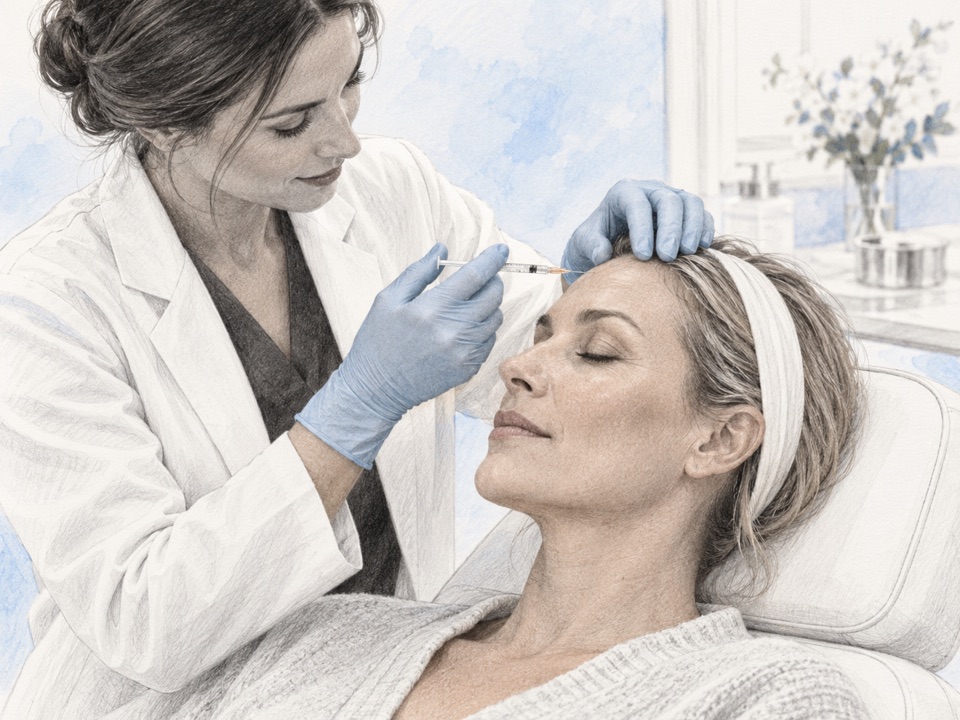
Forehead
- Expression lines
- Frown lines
- Uneven texture
Start with what you notice at rest and when you raise your brows. Lines linked to movement and changes in the skin’s surface call for different conversations.
Main treatments & approaches
For your shortlist
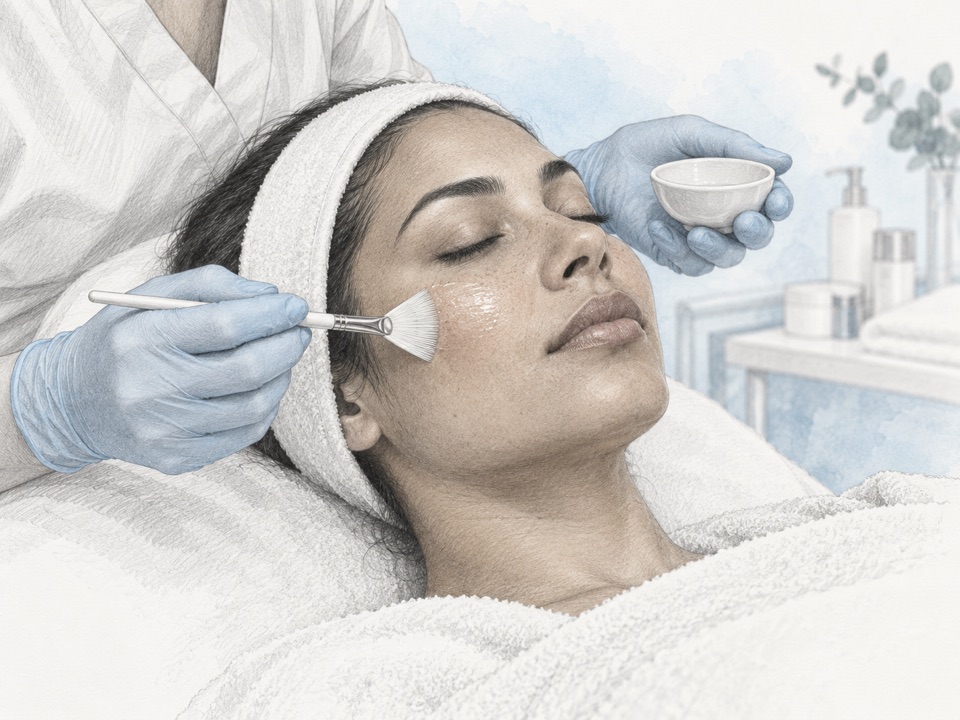
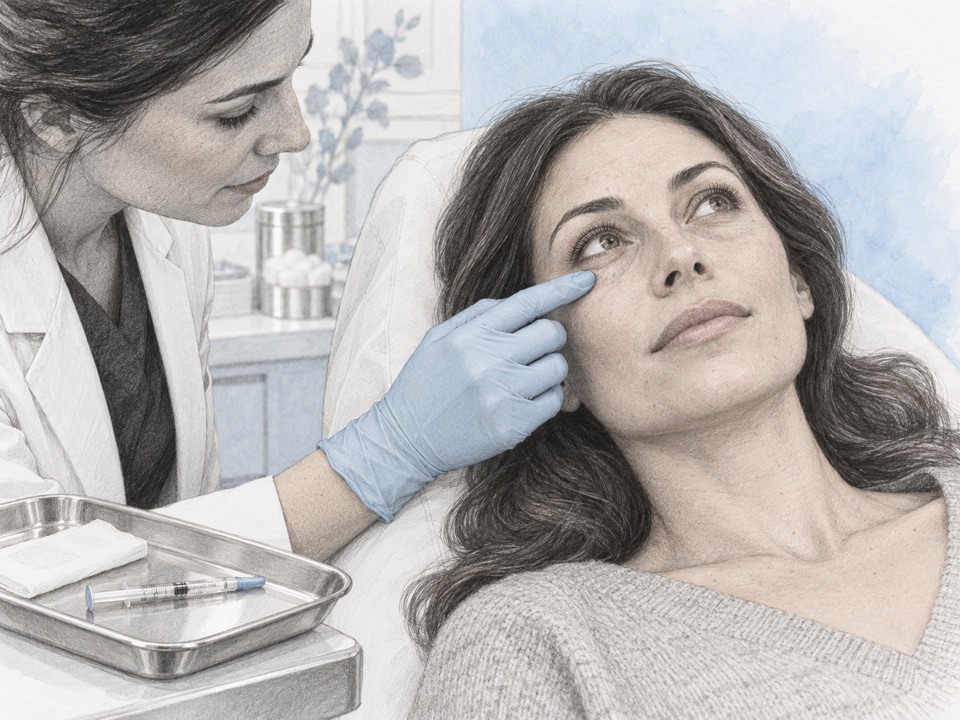
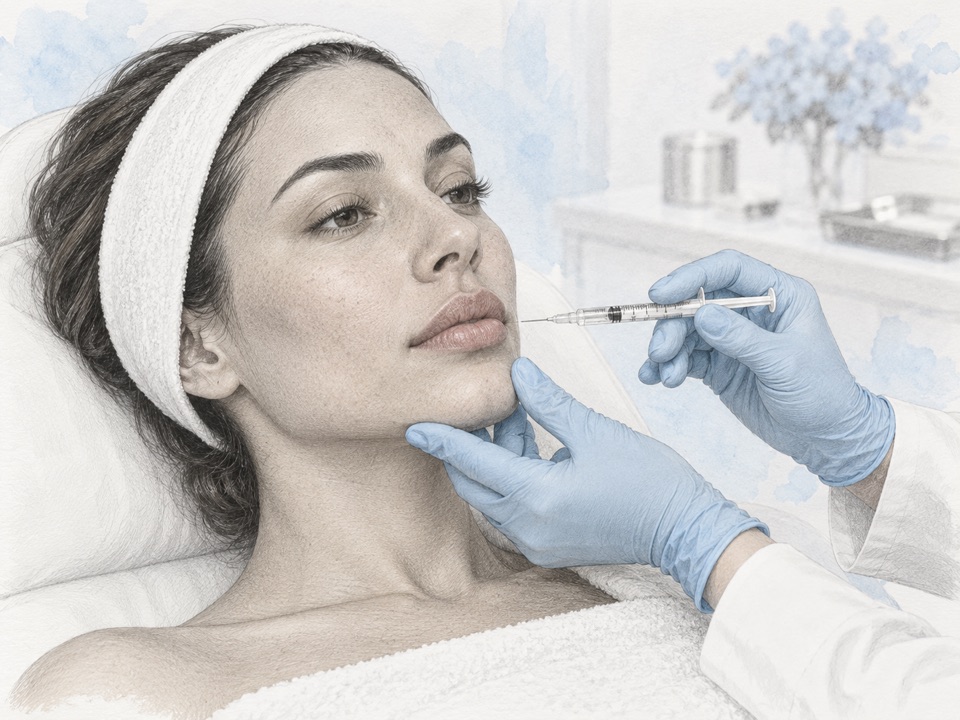
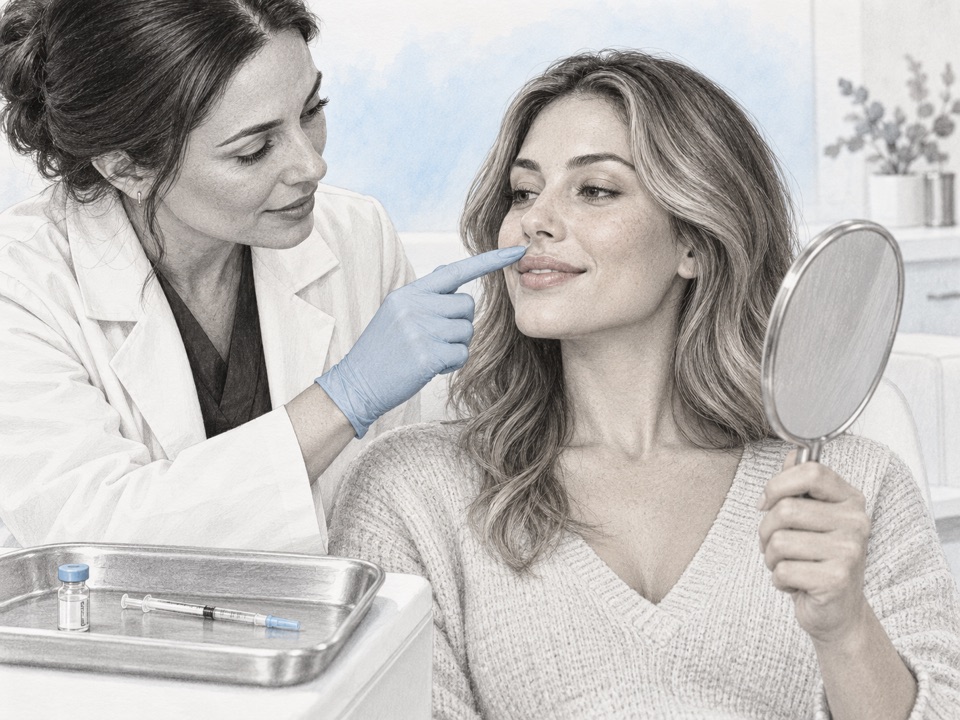
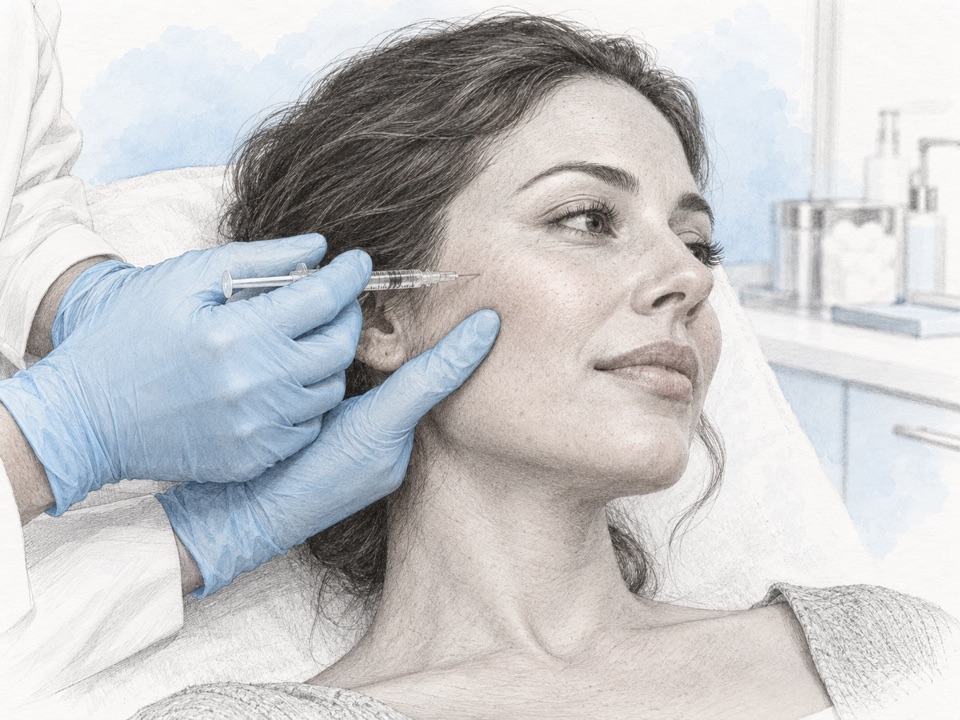
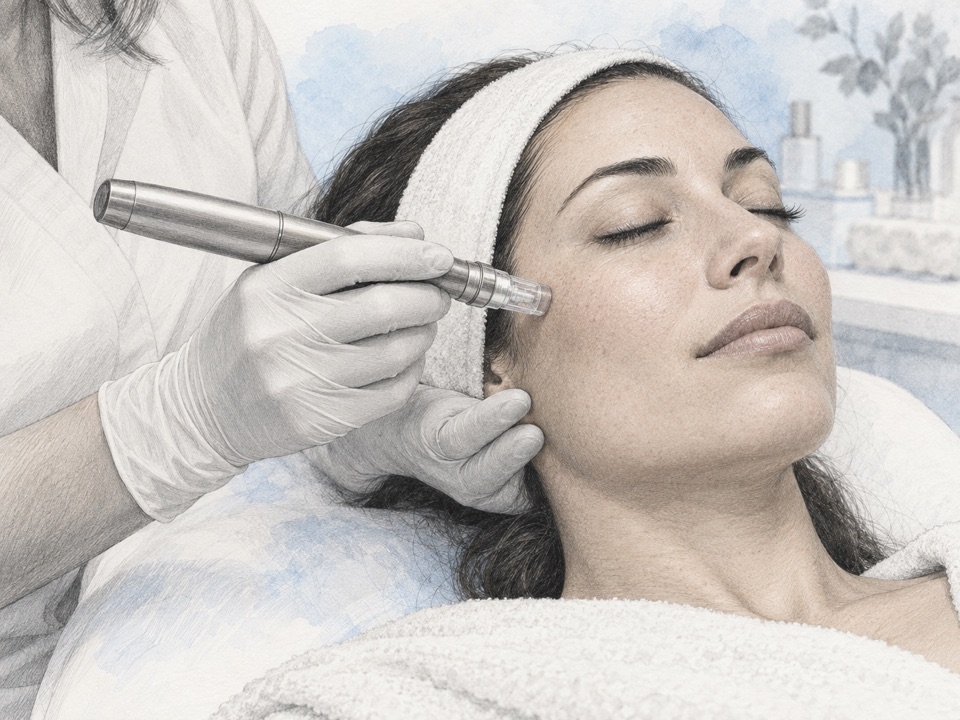
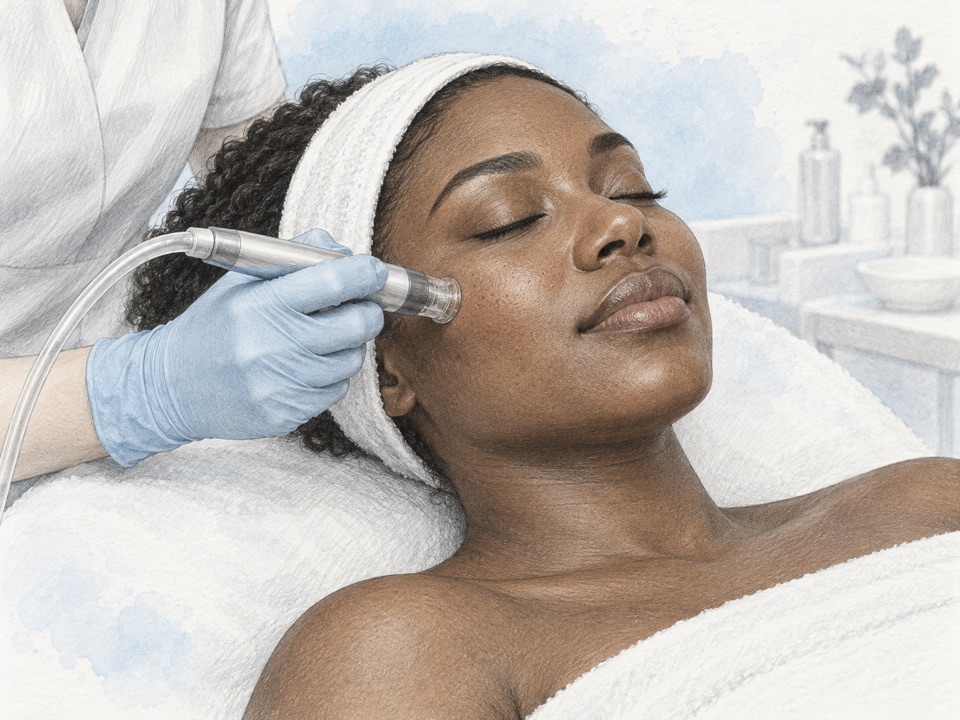
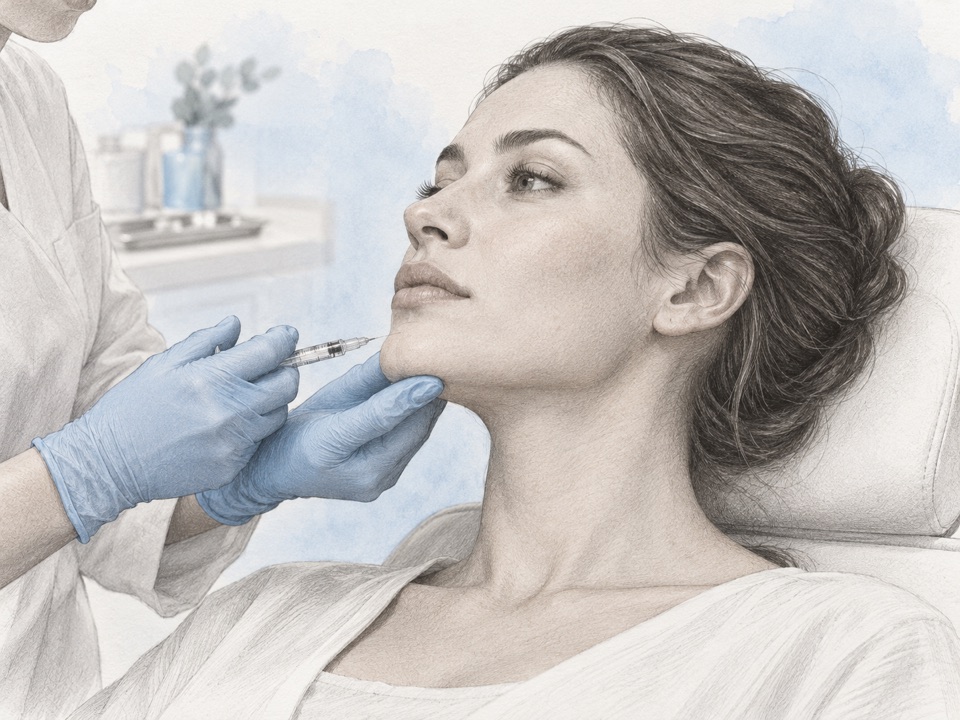
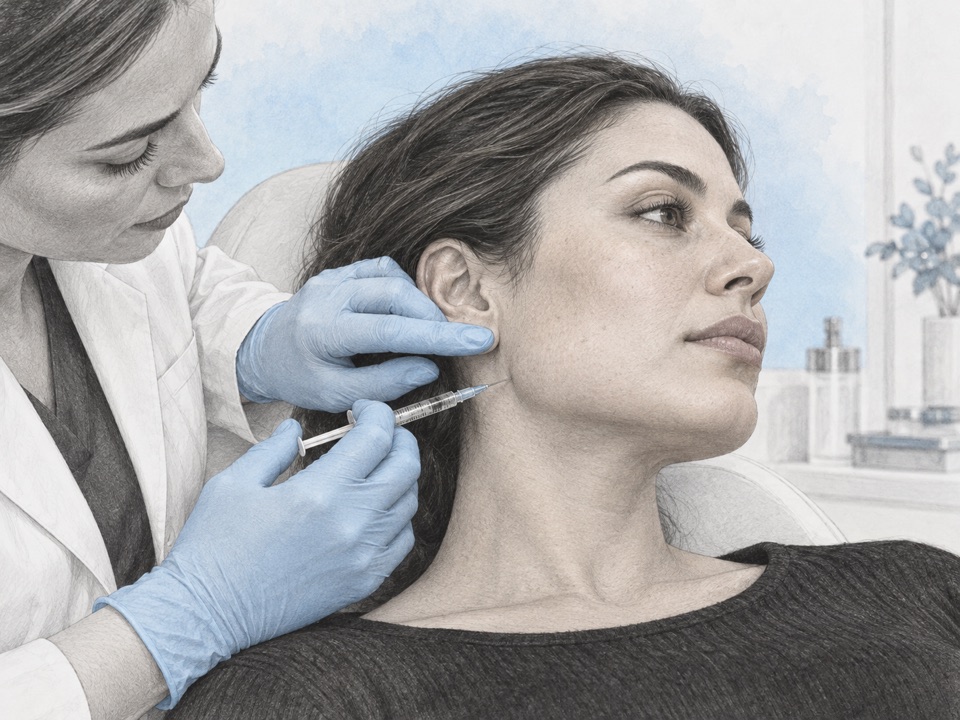
AI-generated editorial illustrations show treatment settings and assessment areas. They do not depict real patients or results.
Read the full Forehead guide +
Updated 17 October 2026 · Educational guide
Start with the movement
Look at the concern at rest and when you raise or draw together your brows. Describe what bothers you and what expression you want to preserve. A consultation should start with that description, rather than a request for a particular number of units. Bring a photograph taken in ordinary light if it helps you explain the difference you notice.
Two different conversations
Botulinum toxin is used for certain lines associated with muscle movement. Its approved forehead use is product-specific; dosing and assessment belong to the treating clinician. Dryness, surface texture, and pigment are different questions. They should not automatically lead to the same appointment.
For the skin itself, begin with skin texture. Read about chemical peels only as one option to discuss after the concern has been assessed.
Make the goal specific
Tell the clinician if you dislike a heavy-looking brow, need expressive movement for work, or have had an unwanted result before. Ask them to explain the intended change and the limits of the proposal. Ask how they record the starting point and when they would reassess you. A follow-up plan matters more than a promise of perfect symmetry.
Before you book
Ask who will treat you, which product they propose, whether its use is approved for the area, what complications they discuss, and what the total charge includes. Share your previous treatments and medicines with the clinician. You can take the plan home and decide later.
Sources & further reading
Under-eyes
- Hollows
- Dark circles
- Puffiness
A shadow, a change in skin color and puffiness can look similar. Begin by identifying the cause; one treatment will not address all three.
Main treatments & approaches
For your shortlist
AI-generated editorial illustrations show treatment settings and assessment areas. They do not depict real patients or results.
Read the full Under-eyes guide +
Updated 17 October 2026 · Educational guide
Describe what you see
“Tired eyes” can mean a darker color, a hollow, puffiness, fine lines, or a mix. Note whether the appearance changes through the day and whether it is new. A qualified professional needs to assess the cause before recommending a cosmetic approach. A photograph does not establish that filler is the right choice.
Why the distinction matters
Mayo Clinic describes several contributors to under-eye darkness. A hollow-looking shadow and a change in skin color can look similar in a mirror while calling for different discussions. Seek medical assessment for swelling or discoloration that is new, one-sided, or worsening.
Do not use a treatment menu to diagnose the cause. Bring your observations, previous procedures, and questions to the appointment.
Treat product claims carefully
Some products, including Juvéderm Volbella XC and Restylane Eyelight, have FDA-approved uses for under-eye hollows in adults over 21. That does not make every filler product or every injection around the eyes an approved use. Ask a clinician about the exact product, proposed location, approval status, and risk. The filler guide explains general injection risks, but its discussion of lips is not a guide to treating under-eyes.
A recommendation to do nothing, manage a medical cause, or see another specialist should be an acceptable outcome of a consultation.
Questions worth asking
What do you think is creating the shadow? What could the proposed treatment leave unchanged? Could it make puffiness more noticeable? What alternatives would you consider? Who would manage a complication? Ask for an explanation you understand before agreeing to treatment.
Sources & further reading
Lips
Outline, fullness and balance are different goals. Describe the change you want at rest and when smiling, including what you want to preserve.
Main treatments & approaches
For your shortlist
AI-generated editorial illustrations show treatment settings and assessment areas. They do not depict real patients or results.
Read the full Lips guide +
Updated 17 October 2026 · Educational guide
More than “bigger”
Think about the part of the lip you are discussing: outline, volume, asymmetry, or lines around the mouth. Bring reference images as a conversation starter, with the understanding that your own anatomy sets the possibilities. Explain whether your priority is a visible change or preserving your familiar appearance.
Read the filler guide first
Lip filler covers the treatment itself, including the products, recovery, limitations, and risks. Dermal filler injection is a medical procedure. Rare injection into a blood vessel can cause serious injury. Ask how the treating clinician recognizes and manages a complication.
A “lip flip” is a different intervention from adding filler. If it is proposed, request the exact product and a discussion of its approval status, expected effect, and impact on lip function.
Bring your treatment history
Tell the clinician about previous filler, problems after injections, allergies, and cold sores. Share any available product records. Do not assume that an earlier treatment has completely disappeared simply because you can no longer see its effect. The professional should decide what further assessment is needed.
A practical consultation checklist
Ask what the plan will change at rest and when smiling. Discuss visible recovery, follow-up, the total cost, and whom to contact after hours. Ask how to distinguish an expected reaction from a problem needing immediate care. Keep the written instructions accessible after your appointment.
Sources & further reading
Cheeks
- Volume & contour
- Acne marks
- Uneven tone
Cheek shape and the skin over it are separate questions. Decide whether you want to discuss fullness, surface changes, or both.
Main treatments & approaches
For your shortlist
AI-generated editorial illustrations show treatment settings and assessment areas. They do not depict real patients or results.
Read the full Cheeks guide +
Updated 17 October 2026 · Educational guide
Name the change you want
A flatter-looking cheek, a deeper fold, and acne marks are separate concerns. Start with the change you notice rather than a borrowed description such as “lifted” or “snatched.” Tell the clinician what you like about your face as well as what you are considering changing.
Volume and surface
Some dermal fillers have FDA-approved uses for cheek augmentation. Approval belongs to a particular product and use; it is not a guarantee that adding volume will suit an individual face. The filler guide introduces general product and safety questions.
If the concern is acne marks, uneven tone, or roughness, start with skin texture. Microneedling and chemical peels address different questions from cheek volume.
Plan for the whole face
Ask how the proposal relates to your existing proportions and whether a staged approach would make it easier to assess. Ask to see the plan in ordinary light. A photograph with different lighting or expression can make a result hard to judge. The clinic should explain what it proposes without promising that a treatment will reproduce another person’s features.
Leave room to decide
Write down the product, amount proposed, cost, follow-up arrangements, and important risks. Ask what happens if you are unhappy with the result and whether further treatment would cost extra. Take the information away if you need time; consultation and treatment do not have to be the same decision.
Sources & further reading
Skin texture
- Roughness
- Acne scars
- Uneven tone
Describe the particular change: flaking, bumps, scars or uneven color. These treatments have different purposes, recoveries and limits.
Main treatments & approaches
For your shortlist
AI-generated editorial illustrations show treatment settings and assessment areas. They do not depict real patients or results.
Read the full Skin texture guide +
Updated 17 October 2026 · Educational guide
Describe the texture
Is the concern dry flaking, small bumps, acne scars, visible pores, or uneven color? Note when it began and what products you have tried. Bring your routine to the consultation, including products that irritated your skin. An active rash or persistent acne deserves assessment before a cosmetic procedure is planned.
Match the question to the option
Microneedling may be discussed for certain scars or wrinkles. Chemical peels vary in depth and purpose. HydraFacial is a different kind of surface treatment. These are not interchangeable names for better skin.
Use the treatment pages to understand what each procedure is intended to do and its limits. Ask the clinician why one option fits your specific concern better than alternatives, including skin care or no procedure.
Put recovery into the plan
Give the clinician your real calendar: work, exercise, travel, outdoor time, and any event. Ask about redness, peeling, pigment changes, and the aftercare required for the proposed treatment. “No downtime” is too vague to plan around. Ask when your usual products and activities can resume.
Make improvement measurable
Agree on the particular feature you are assessing and when a result should be reviewed. Use comparable photographs, lighting, and expression. Ask when a lack of improvement would change the plan rather than automatically lead to another session. Smoothness is not a requirement for healthy or attractive skin.
Sources & further reading
Jawline
- Definition
- Skin laxity
- Muscle prominence
Outline, fullness, skin and muscle can each affect the lower face. A useful plan starts by explaining which tissue it would treat.
Main treatments & approaches
For your shortlist
AI-generated editorial illustrations show treatment settings and assessment areas. They do not depict real patients or results.
Read the full Jawline guide +
Updated 17 October 2026 · Educational guide
Separate the possible concerns
The word “jawline” can describe a profile, lower-face fullness, skin laxity, or muscle prominence. Explain what you mean in your own words and from which angle you notice it. A plan should identify the concern it addresses rather than promise a generally “sharper” face.
Ask what is being treated
Some filler products have specific FDA-approved uses for chin or jawline definition. Skin tightening is another category, with different limitations. Neither label tells you what is appropriate for your anatomy. Ask the clinician to explain the tissue they are targeting and why.
Read body contouring for an introduction to device categories, but do not assume a device authorized for a body area is suitable for the face or neck.
Be precise about muscle treatment
If a clinic proposes botulinum toxin around the jaw, ask which muscle, for what purpose, and whether that use is approved or off-label. The Botox guide explains the distinction. Cosmetic discussion should not substitute for assessment of pain, clenching, or a dental problem.
What to take away
Ask for a written account of the proposed procedure, important risks, likely limits, cost, and follow-up. Explain any previous jaw or dental treatment. Consider how the plan fits your own features rather than judging it against a filtered profile photograph.
Sources & further reading